
World Pancreatic Cancer Awareness Day 2026: Recognising the Signs, Understanding the Risks and the Role of Diagnostic Imaging
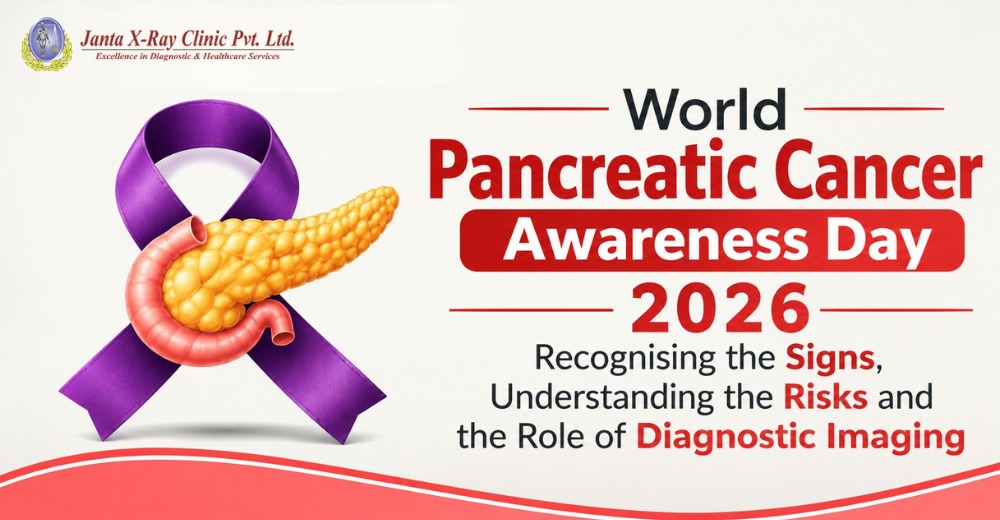
Pancreatic cancer is not always easy to recognise in its early stages. Understanding its warning signs, knowing the associated risk factors and seeking timely medical advice can make an important difference.
Observed on 19 November, World Pancreatic Cancer Awareness Day highlights the importance of understanding a disease that can remain unnoticed until it has progressed.
Understanding the pancreas and its role
The pancreas is a gland located deep inside the abdomen, behind the stomach. Although relatively small, it performs two essential functions that keep the body working normally.
It produces digestive enzymes that help break down food and hormones, including insulin, that regulate blood sugar levels.
Pancreatic cancer develops when abnormal cells in the pancreas begin growing uncontrollably. Depending on where the tumour develops and how the disease progresses, it can affect surrounding organs and normal bodily functions.
Want a quick overview? Watch our informative reel on pancreatic cancer to understand its warning signs, risk factors and the importance of diagnostic evaluation.
Pancreatic cancer symptoms: What should you look out for?
One of the challenges with pancreatic cancer is that noticeable symptoms may not appear during its early stages. When symptoms do develop, they can sometimes resemble those of more common digestive or abdominal conditions.
Some warning signs worth discussing with a doctor include:
- Persistent pain in the upper abdomen or back.
- Yellowing of the skin or eyes, known as jaundice.
- Unexplained weight loss.
- Reduced appetite.
- Dark-coloured urine or unusually pale stools.
- Persistent digestive discomfort.
These symptoms do not necessarily indicate cancer. However, if they are persistent, unexplained or unusual for you, a medical evaluation is important.
What increases the risk of pancreatic cancer?
Certain factors are associated with a higher likelihood of developing pancreatic cancer. These include smoking, obesity, chronic pancreatitis, a family history of pancreatic cancer and inherited genetic conditions.
Age and diabetes are also associated with pancreatic cancer risk. In some cases, newly developed diabetes can be an early sign of an underlying pancreatic problem.
Having one or more risk factors does not mean someone will develop cancer. Equally, the absence of known risk factors does not completely eliminate the possibility.
Why can pancreatic cancer be difficult to detect?
Unlike some conditions that produce noticeable symptoms early, pancreatic cancer may develop without clear warning signs.
The pancreas is located deep within the abdomen, making changes difficult to identify through a routine physical examination alone. Symptoms may become apparent only when the tumour grows or affects nearby structures.
This is why persistent symptoms, appropriate clinical assessment and further investigation when indicated are important.
The role of diagnostic imaging in pancreatic cancer
Imaging plays an important role in evaluating suspected pancreatic cancer, understanding the extent of the disease and helping doctors plan further management.
Different investigations provide different information:
Contrast-Enhanced CT Scan: Often a key investigation for suspected pancreatic cancer, it helps examine the pancreas, surrounding blood vessels, nearby structures and possible spread to other organs.
MRI and MRCP: These investigations provide detailed images of the pancreas, pancreatic ducts and bile ducts. They can offer additional information when further evaluation is required.
Whole Body Digital PET CT: In selected patients, PET CT can help assess abnormal metabolic activity and investigate possible distant spread of cancer.
The choice of investigation depends on the patient's symptoms, clinical findings and the doctor's assessment. Imaging is not a substitute for a complete diagnostic evaluation.
Awareness begins with informed action
World Pancreatic Cancer Awareness Day reminds us that understanding our health goes beyond recognising obvious symptoms. It also means paying attention to persistent changes, understanding personal risk factors and knowing when to seek medical advice.
There is currently no recommended routine screening test for pancreatic cancer among people at average risk. Individuals with certain inherited conditions or a strong family history may benefit from specialist assessment and a personalised surveillance plan.
Know the signs. Understand the risks. Seek medical advice when something doesn't feel right.
This World Pancreatic Cancer Awareness Day, let's encourage informed conversations and greater awareness about pancreatic health.
Frequently Asked Questions (FAQs)
Question: Can pancreatic cancer develop without noticeable symptoms?
Answer: Yes. Pancreatic cancer may not produce noticeable symptoms during its early stages. Some people only experience symptoms when the disease has progressed or started affecting nearby structures.
Question: Does newly diagnosed diabetes always indicate pancreatic cancer?
Answer: No. Diabetes is common and most people diagnosed with it do not have pancreatic cancer. However, unexplained new-onset diabetes, particularly alongside other concerning symptoms, should be discussed with a doctor.
Question: Which imaging test is commonly used to investigate pancreatic cancer?
Answer: A contrast-enhanced CT scan using a dedicated pancreatic protocol is commonly used to evaluate suspected pancreatic cancer. MRI, MRCP and other investigations may be recommended depending on the clinical findings.
Question: Can a PET CT scan detect pancreatic cancer?
Answer: PET CT can identify areas of increased metabolic activity and may help assess suspected distant spread in selected patients. However, it is not generally the first-line investigation for diagnosing a primary pancreatic tumour.
Question: Should people with a family history of pancreatic cancer undergo screening?
Answer: People with multiple close relatives affected by pancreatic cancer or certain inherited genetic conditions may have an increased risk. They should discuss genetic counselling and appropriate surveillance with a specialist. Routine screening is not recommended for everyone.
Question: Can pancreatic cancer be detected through a routine blood test?
Answer: No single routine blood test can reliably detect pancreatic cancer. Certain blood markers, such as CA 19-9, may help doctors in specific clinical situations, but they cannot independently confirm or rule out the disease.











Comments List