
World Alzheimer’s Day: Do Not Ignore Repeated Memory Changes

Forgetting a name or missing an appointment once in a while is common. It does not always mean a person has Alzheimer’s disease.
But repeated memory changes should not be ignored. If someone keeps forgetting recent conversations, gets confused in familiar places, or finds regular tasks difficult, it is better to speak to a doctor.
Alzheimer’s disease cannot be diagnosed from one symptom or one scan. The doctor first understands what changes the person and their family have noticed. They may check memory, thinking, behaviour, and the ability to manage everyday work.
Depending on the situation, the doctor may suggest cognitive tests, blood tests, an MRI brain, a CT scan, or other investigations. In some cases, an FDG PET CT scan may also be advised.
On World Alzheimer’s Day, it is a good time to remember one simple thing: if memory loss keeps happening, do not wait too long to get it checked.
What is FDG PET CT?
FDG PET CT is a type of brain scan. FDG stands for fluorodeoxyglucose. It is a small amount of glucose-like tracer used during a PET scan.
The brain needs glucose for energy. Different parts of the brain use glucose while we remember, speak, make decisions, and do everyday work.
In some brain diseases, certain areas may start using less glucose. An FDG PET scan helps doctors see these changes.
The scan can show how different areas of the brain are working. This is different from an MRI or CT scan, which mainly shows the structure of the brain.
What can FDG PET show in Alzheimer’s disease?
In Alzheimer’s disease, some areas of the brain linked with memory and thinking may use less glucose. An FDG PET scan can show this reduced activity.
The pattern seen on the scan may support the doctor’s assessment. It may also help when the doctor is trying to understand whether memory problems are caused by Alzheimer’s disease or another form of dementia.
However, an FDG PET CT scan does not confirm Alzheimer’s disease by itself.
The scan report is always read together with:
-
The person’s symptoms
-
Medical history
-
Memory and thinking tests
-
Blood test results
-
MRI or CT findings, if available
A scan is one part of the assessment. It is not the complete diagnosis.
MRI, CT Scan and FDG PET: What Is the Difference?
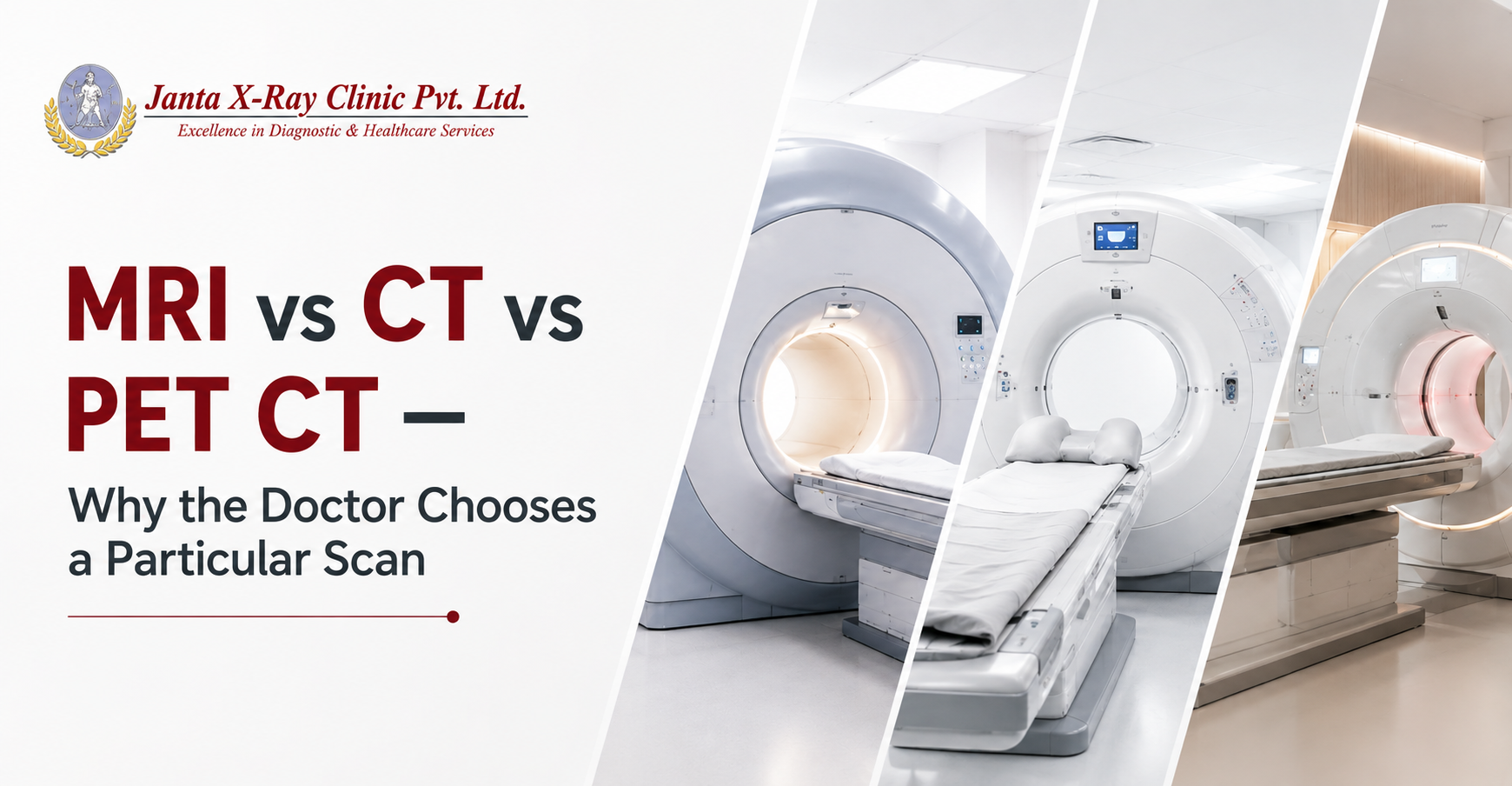
An MRI brain shows the structure of the brain in detail. It can help doctors look for shrinkage in certain brain areas, old strokes, bleeding, fluid build-up, or other changes.
A CT scan can also show structural problems in the brain. It may be used when MRI is not suitable for the patient.
An FDG PET scan looks at how the brain is functioning. It shows how different parts of the brain are using glucose.
So, MRI and CT help doctors see the brain’s structure. FDG PET helps them see brain activity.
In some cases, these tests may be used together because each test gives different information.
When can FDG PET CT be advised?
Not every person with memory loss needs a PET CT scan.
A doctor may consider FDG PET CT when the cause of memory problems is still unclear after the first assessment and other tests.
It may also be useful when the doctor needs more information to tell the difference between:
-
Alzheimer’s disease
-
Frontotemporal dementia
-
Dementia with Lewy bodies
-
Other causes of cognitive decline
The decision to do an FDG PET scan should be made by a qualified doctor based on the person’s symptoms and medical condition.
Memory Changes That Should Be Checked
Memory loss does not always mean Alzheimer’s disease. Poor sleep, stress, depression, vitamin deficiency, thyroid problems, infections, certain medicines, and other health conditions can also affect memory.
Still, it is important to speak to a doctor if someone has regular or worsening changes such as:
-
Forgetting recently learned information again and again
-
Repeating the same question many times
-
Getting lost in familiar places
-
Finding it difficult to manage bills, medicines, or cooking
-
Taking much longer to find common words
-
Feeling confused about time, place, or people
-
Showing clear changes in mood, behaviour, or judgement
These may be early signs of Alzheimer’s or other causes of dementia. A proper check-up can help find the reason.
Alzheimer’s Disease and Dementia Are Not the Same Thing
Dementia is a general word used for problems with memory, thinking, behaviour, and daily activities.
Alzheimer’s disease is one of the most common causes of dementia. But not every person with dementia has Alzheimer’s disease.
Other conditions, including vascular dementia, Lewy body dementia, and frontotemporal dementia, can also cause memory and thinking problems.
This is one reason why the correct evaluation is important. The symptoms may look similar, but the cause may be different.
Early Evaluation Can Help Families Plan Better
An early check-up does not always mean that someone has Alzheimer’s disease. It helps the doctor understand what may be causing the memory changes.
Some causes may be treatable. In cases where Alzheimer’s disease or another dementia is suspected, early evaluation can help the person and family understand what support may be needed.
It can also help families plan for medicines, daily routines, safety at home, future care, and emotional support.
The aim is not to create fear. The aim is to understand the problem properly.
FDG PET CT at Janta X Ray Clinic
Janta X Ray Clinic Pvt Ltd offers in-house Whole Body Digital PET CT imaging.
For patients who are being evaluated for memory loss, dementia, or suspected Alzheimer’s disease, an FDG brain PET study may be performed if advised by the treating doctor.
The PET part of the scan shows patterns of glucose use in the brain. The CT part helps provide anatomical reference and helps locate the findings seen on the scan.
The value of the scan depends on the right clinical question, correct preparation, proper scanning, and expert reporting. The findings should always be understood along with the patient’s symptoms and other reports.
This World Alzheimer’s Day, Pay Attention to Repeated Changes
Forgetting something once may not be a problem.
But if memory loss keeps happening, familiar activities are becoming difficult, or a family member notices a clear change, do not brush it aside as normal ageing.
Speak to a qualified doctor. Get the symptoms checked. If specialised imaging is advised, an FDG PET CT scan may give the doctor more information about how the brain is functioning.
Janta X Ray Clinic Pvt Ltd | Whole Body Digital PET CT
FDG PET imaging for specialised evaluation of brain metabolism
Book your Investigations 011-49114911
Frequently Asked Questions
Question: What does an FDG PET scan show in Alzheimer’s disease
Answer: FDG PET shows patterns of glucose metabolism in the brain. Alzheimer’s disease can be associated with reduced metabolism in characteristic regions. These findings can support the diagnostic evaluation, particularly when the clinical picture is not clear.
Question: Does FDG PET confirm Alzheimer’s disease
Answer: No. FDG PET is not a standalone confirmation test for Alzheimer’s disease. It is a functional imaging tool that provides information about brain metabolism and can support the differential diagnosis. Other clinical assessments and investigations may also be required.
Question: How is FDG PET different from an MRI brain
Answer: MRI primarily provides detailed information about the brain’s structure. FDG PET provides information about glucose metabolism and therefore adds a functional perspective. Depending on the clinical situation, both may provide complementary information.
Question: Can FDG PET distinguish Alzheimer’s disease from other dementias
Answer: FDG PET can help identify metabolic patterns associated with different neurodegenerative conditions. This can support differentiation between Alzheimer’s disease and conditions such as frontotemporal dementia and dementia with Lewy bodies. The scan must still be interpreted alongside the clinical assessment and other investigations.
Question: Does every person with memory loss need a PET CT
Answer: No. PET imaging is not routinely required for every person experiencing memory problems. It may be considered when there is continuing uncertainty about the underlying cause after clinical evaluation and other appropriate investigations.
Question: Is FDG PET the same as amyloid PET
Answer: No. They answer different questions. FDG PET looks at glucose metabolism and patterns of brain dysfunction. Amyloid PET uses a different tracer to visualise amyloid plaques associated with Alzheimer’s disease.
Question: What should someone do if they notice persistent memory changes
Answer: The first step is to discuss the changes with a qualified doctor. A proper evaluation can determine whether further cognitive assessment, laboratory tests, MRI, FDG PET or other investigations may be appropriate for that individual.


.jpg)
.png)
1.png)
.png)
1.jpg)

.png)

.png)
Comments List