
The Role of MRI, CT and Digital PET-CT
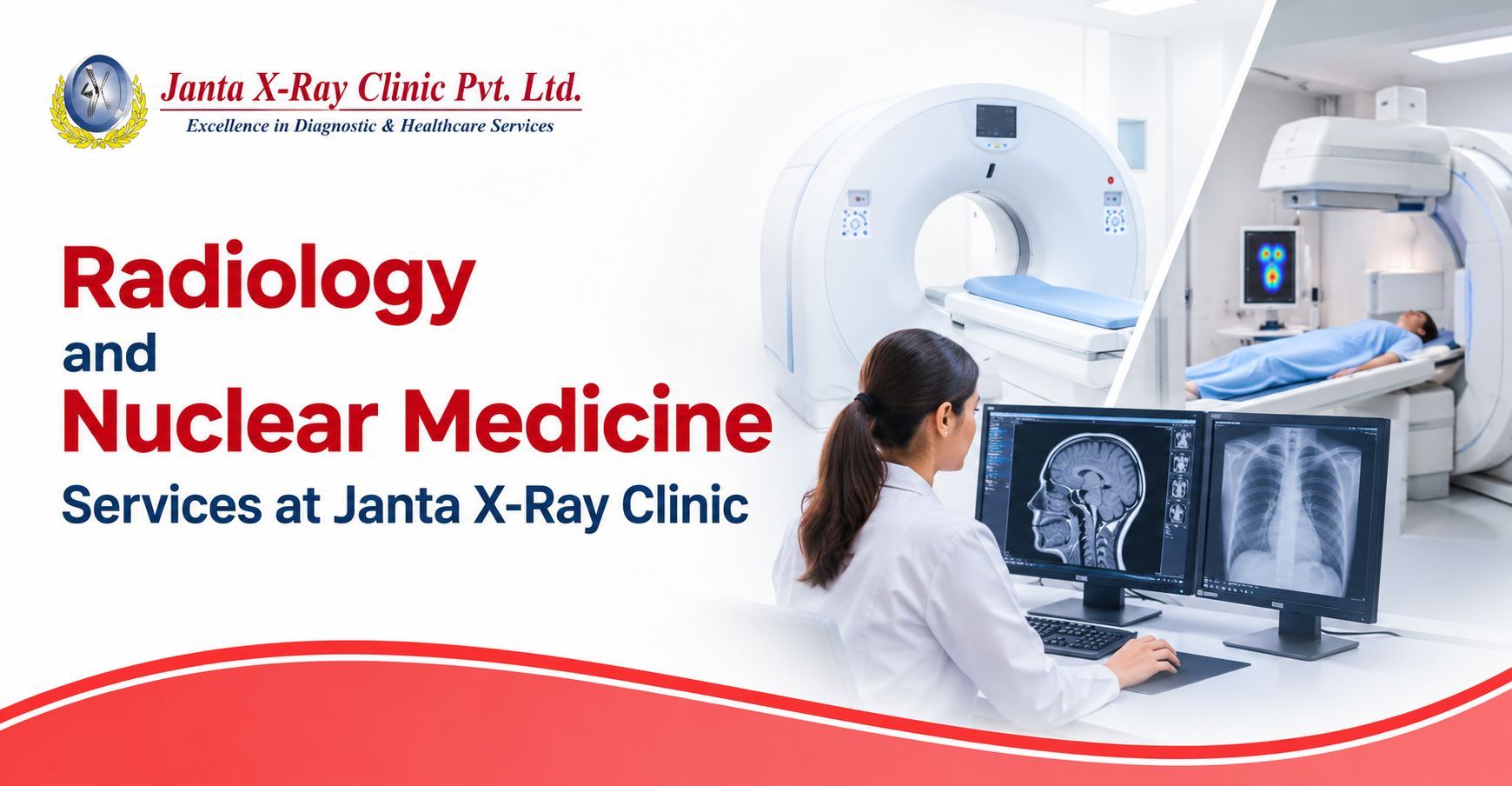
Doctors do not recommend an MRI, CT, or PET-CT scan without a specific reason. Every referral is driven by a question: What is the cause of the problem? Which part of the body needs to be examined? And what information will help determine the next course of action?
At Janta X-Ray Clinic Private Limited, a wide range of imaging tests encompassing both radiology and nuclear medicine services are available under one roof. Through MRI and CT scans, doctors can examine the body's internal organs, while 'whole-body digital PET-CT' provides additional insights into metabolic activity particularly for specific diagnostic procedures related to cancer.
Not every symptom requires the same scan
Headaches, back pain, abdominal discomfort, or breathing difficulties can have many different causes. This is why, even when two people experience the same symptom, they may be advised to undergo different medical tests.
One person might require an MRI for a detailed examination of their spine, brain, or joints. Another person might need a CT scan for an immediate assessment of their chest, abdomen, or an injury. Someone undergoing cancer screening might be advised to have a PET-CT scan, which helps doctors pinpoint the location of an issue within the body and understand the nature of the underlying activity.
The choice of scan is based on the specific information the doctor needs, rather than one test being inherently better than another.
MRI: For a closer examination of soft tissue
An MRI uses a magnetic field and radio waves to create detailed images of the body. It does not involve the use of ionizing radiation, making it highly useful for examining various soft tissues in the body.
Doctors often recommend an MRI to examine the brain, spinal cord, discs, nerves, joints, muscles, ligaments, and tendons. For instance, if someone has had persistent knee pain, the issue may not be limited to the pain itself; a doctor might need to examine the cartilage, ligaments, or tendons to understand the underlying problem.
The same applies to neurological symptoms. When a condition involves the brain, spinal cord, or other soft tissues, an MRI can provide detailed information that is essential for further assessment or treatment.
CT: Fast and detailed images are delivered
A CT scan uses X-rays to create cross-sectional images of the body. It is useful when doctors require quick and clear information about the body's structures.
CT scans are commonly used to examine injuries, issues related to the chest and abdomen, as well as bones, lungs, and blood vessels. In emergency situations, the speed of a CT scan is crucial, as doctors may need to rapidly assess internal injuries or other serious conditions.
Some CT scans involve the use of a 'contrast' agent, which allows specific organs, tissues, or blood vessels to be seen more clearly. CT angiography is one such example, where doctors may need to obtain a detailed view of blood vessels.
PET-CT: Beyond just a structural scan
Some medical questions cannot be answered simply by looking at the size or location of an organ. This is where a PET-CT scan plays a distinct role.
A PET-CT scan provides two types of information. The PET component reveals how a radiotracer is distributed within the body, which indicates metabolic activity. The CT component displays anatomical structures, helping to pinpoint the exact location of a feature or abnormality.
By combining these two types of images, doctors can determine both the location of a feature and how it is functioning. This additional information proves highly valuable when making decisions regarding further diagnostic testing or treatment.
PET-CT scans for cancer care
PET-CT is often associated with cancer diagnosis, and for good reason. Depending on the type of cancer and the patient's condition, a PET-CT scan may be recommended. It can be used to determine the extent of the disease, assist in staging or re-staging, evaluate the effectiveness of treatment, or investigate a suspected recurrence of cancer.
However, not every cancer patient requires a PET-CT scan. This decision depends on the type of cancer, its stage, the treatment plan, and the specific purpose of the scan. Furthermore, it is not a routine screening test for everyone.
PET-CT scan machine at Janta X-Ray Clinic
Janta X-Ray Clinic Private Limited offers 'whole-body digital PET-CT' scans using the uMI 550 system. This system integrates digital PET detection with an 80-slice CT scanner, providing both functional and anatomical information about the body in a single examination.
A state-of-the-art machine is only one part of the process. Selecting the appropriate test, following the correct protocols, and accurately analyzing the images are equally important. The primary objective is to provide the treating physician with clear and actionable information to support patient care.
One scan is not always sufficient
It can be confusing when a patient is advised to undergo an MRI or PET-CT scan after having already had a CT scan. However, this is usually because the doctor requires a different type of information.
A CT scan can reveal the structure and location of an issue. An MRI allows for a more detailed examination of soft tissues. A PET-CT scan provides information about metabolic activity, which can be highly useful in certain conditions, such as those involving cancer.
These tests are not contradictory; rather, they often complement one another, helping to create a clearer and more comprehensive picture of the patient's condition.
Questions to ask before the scan
If your doctor has recommended an MRI, CT, or PET-CT scan, feel free to ask a few questions.
-
What will this scan be used to check for?
-
Why was this specific test recommended?
-
Will a contrast agent or radiotracer be used?
-
Is any preparation required before the scan?
-
Should I bring my previous reports or scans with me?
-
How will the results help with my treatment?
Asking these questions will make it easier to understand the entire process and help you feel better prepared.
Frequently Asked Questions
What is the difference between MRI, CT and PET-CT?
MRI uses magnetic fields and radio waves to create detailed images, especially of soft tissues. CT uses X-rays to create cross sectional anatomical images. PET-CT combines metabolic information from PET with anatomical images from CT.
Why would a doctor advise MRI after CT?
A CT scan may show anatomical details, while MRI can provide more detail about soft tissues such as the brain, spinal cord, joints, ligaments and tendons.
Is PET-CT only for cancer?
No. PET-CT is mainly known for cancer related evaluations, but it also has selected uses in neurological and cardiac conditions.
Does every cancer patient need a PET-CT?
No. PET-CT is advised only in specific situations, depending on the cancer type, stage and treatment plan.
Why do doctors ask for old scans?
Previous scans help doctors compare changes over time. This is useful when monitoring a known condition or checking treatment response.
Book your scan appointment
Janta X-Ray Clinic Private Limited offers MRI, CT, and whole-body digital PET-CT services, all under one roof. If your doctor has recommended any of these tests, the clinic’s team can assist you with scheduling an appointment and answering any questions you may have regarding the imaging procedures.
To book your appointment, please call 011-49114911 or visit Janta X-Ray Clinic Private Limited.












Comments List