
Signs of Throat Cancer? Here is What You Should Do First
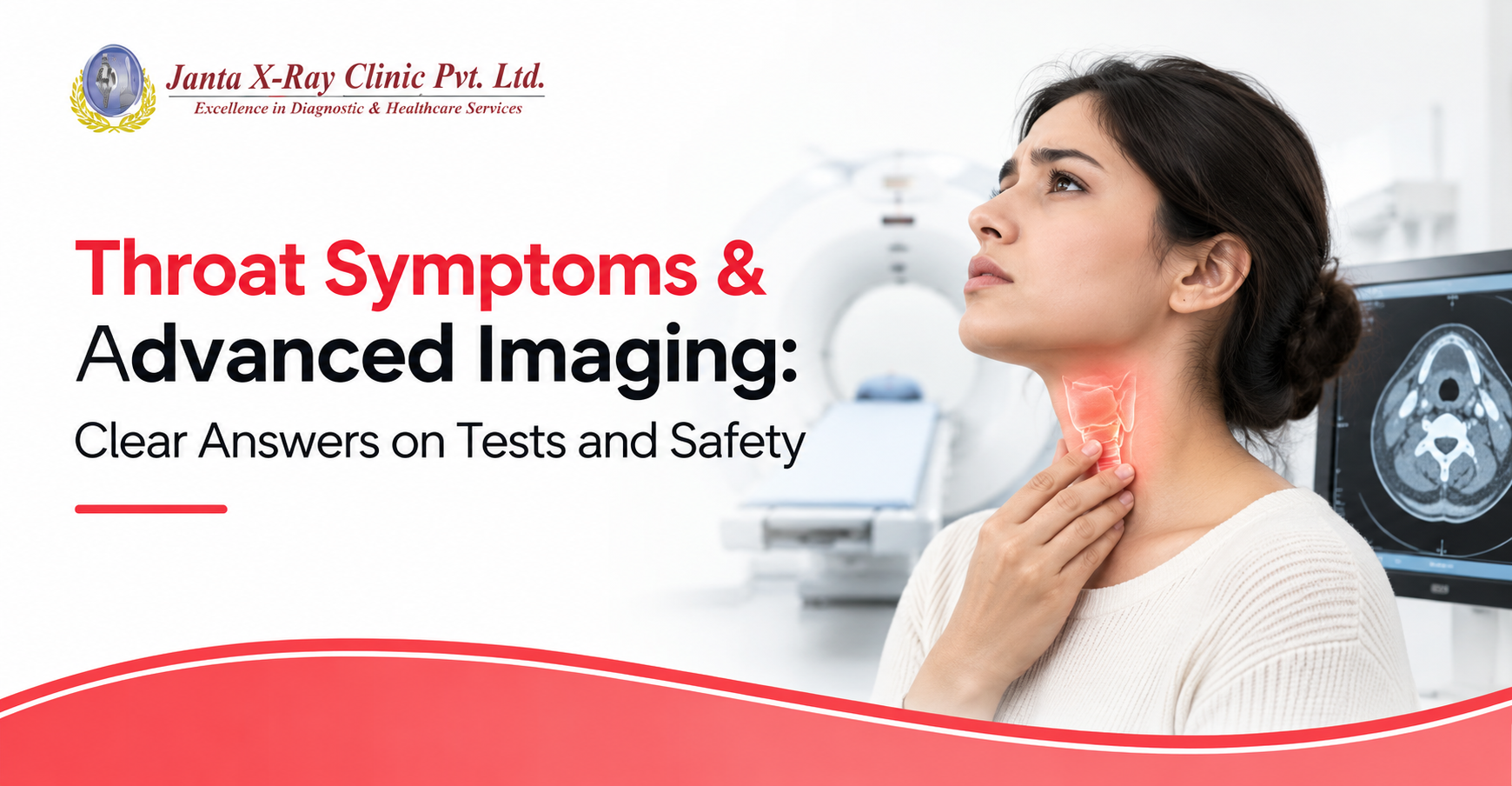
If you experience swelling in your neck, an unusual change in your voice, or difficulty swallowing, you might consider that these could be symptoms of throat cancer. Although common causes such as a throat infection, acid reflux, or mild inflammation are more likely to be behind these symptoms, it is still important to take them seriously.
If symptoms continue, doctors take patients through a structured evaluation beginning with an ENT checkup and moving on to advanced scans such as a 'whole-body PET-CT scan' only if required medically to assess disease progression or decide on treatment.
What Are the Possible Throat Cancer Symptoms?
Throat cancer typically affects the pharynx (throat) or the larynx (voice box). Since these tissues facilitate speaking, eating, and breathing, early warning signs directly impact these everyday activities.
Some symptoms of throat cancer may include:
-
Having a sore throat or persistent cough lasting longer than 2-3 weeks.
-
Unexplained changes in your voice (hoarseness).
-
A swelling or firm lump on the neck that doesn’t go away.
-
Pain when you try to swallow food or liquids.
-
A persistent pain in the ear without a known infection.
-
Unaccounted for weight loss, and shortness of breath.
Lumps in the neck and a sore throat are usually not harmful. For instance, lymph nodes often swell when your body is fighting a cold or an infection. However, if any symptom persists or gradually worsens, it is important to get examined by a specialist.
Emergency Note: Seek immediate emergency medical care if you experience sudden difficulty breathing or find yourself completely unable to swallow liquids or saliva.
What to Do First: Consultation with an ENT Specialist
You do not need to decide for yourself which scan or test to undergo. Your first step should always be to make an appointment with an ear, nose, and throat doctor (ENT specialist or otolaryngologist).
During your visit, the ENT specialist will perform a physical examination of your throat, mouth, and neck; for this, they often use a small mirror or a thin, flexible scope (endoscope).
If a doctor observes any suspicious or abnormal tissue, they will recommend a biopsy. A biopsy involves taking a small sample of tissue for examination under a microscope. A biopsy is the only definitive medical method to confirm or rule out cancer. Imaging scans alone cannot detect cancer, nor can they replace a tissue biopsy.
When Might a Whole Body PET CT Scan Be Medically Recommended?
Doctors do not recommend advanced nuclear imaging for routine screening or common symptoms. They may advise a 'whole-body PET-CT scan' only when a disease has been confirmed via biopsy or when a complex case requires investigation to make appropriate clinical decisions.
-
Staging the disease: To determine the exact extent of the tumor and see whether cancer cells have spread to nearby lymph nodes or distant parts of the body.
-
Treatment Planning: To help radiation oncologists and surgeons map exact treatment boundaries while protecting surrounding healthy tissues.
-
Assessing Treatment Response: To check how effectively a tumor responded after chemotherapy or radiation therapy.
-
Checking for Recurrence: To investigate suspected cancer relapse if physical examinations or basic standard scans remain unclear.
How Does a whole body PET CT Scan Work?
In a PET-CT scan for throat, two imaging techniques are combined into a single procedure:
-
PET (Positron Emission Tomography): Uses a small, controlled dose of a radioactive sugar tracer injected into your bloodstream. Highly active cells—such as fast-growing cancer cells—consume more sugar and show increased tracer activity on the scan.
-
CT (Computed Tomography): Uses targeted X-rays from multiple angles to create detailed, cross-sectional anatomic pictures of internal structures.
By pairing metabolic activity (PET) with structural mapping (CT), doctors gain a clearer diagnostic picture.
What Increased Tracer Activity Means
It is important to note that a PET-CT scan detects not only cancer but also cellular metabolism. In conditions other than cancer—such as active infections, healing tissues, and inflammation—the body consumes more glucose energy, resulting in increased tracer activity. An area appearing active on the scan does not necessarily indicate cancer; doctors always interpret scan results in conjunction with physical examinations and biopsy findings.
Understanding Radiation Exposure and Safety
It is completely normal to have questions regarding radiation safety whenever an imaging test is advised. Having access to clear, objective details assists you in grasping the reasoning behind your physician's recommendation for the scan.
A whole-body PET-CT scan involves exposure to radiation from both the radioactive tracer (the PET component) and X-ray imaging (the CT component).
-
Radiation Breakdown:
-
Total effective dose: Depending on the protocol, a standard scan delivers an estimated diagnostic dose of approximately 14 to 25 millisieverts (mSv).
PET component: This contributes a dose of approximately 5 to 8 mSv from the injected tracer.
CT component: This contributes a dose of approximately 6 to 15+ mSv, depending on whether a low-dose or diagnostic CT setting is used.
-
-
To understand mSv: The millisievert (mSv) is a standard unit for measuring radiation absorption in body tissues. For example, the amount of natural background radiation received from the environment is approximately 2.4 to 3 mSv per year. A chest X-ray delivers about 0.1 mSv of radiation.
-
Is it Dangerous or Extreme? A PET CT scan delivers a moderate / substantial diagnostic dose rather than a minimal or extreme dose. It does not cause immediate radiation sickness or acute harm. The radioactive tracer breaks down quickly and leaves the body within 24 hours.
-
Benefits and risks: Doctors recommend this scan only when the essential clinical information it provides such as determining the precise stage of the disease or confirming the effectiveness of treatment—far outweighs the potential long-term risks associated with radiation.
Safety Precautions
Be sure to inform your medical team beforehand if you:
-
Are pregnant or suspect you might be pregnant.
-
Are currently breastfeeding.
-
Have diabetes (as elevated blood sugar levels affect how the PET tracer is absorbed).
Your diagnostic imaging facility will provide specific, individual guidelines regarding pre-scan fasting, medication adjustments, and post-scan hydration.
Diagnostic Imaging at Janta X-Ray
When a doctor recommends diagnostic imaging, choosing a renowned provider gives patients peace of mind.
Established in 1978, Janta X-Ray has been providing diagnostic services across India for over four decades. If your specialist has recommended advanced imaging, experienced staff can assist you with scheduling appointments, safety measures, and necessary preparation instructions.
Taking the Next Step
If you notice a lump in your neck, experience persistent hoarseness, or have difficulty swallowing, consult an ENT specialist first. Only a medical examination can determine the cause of your symptoms and decide whether further testing is required.
If your doctor has evaluated your symptoms and recommended a 'Whole Body PET-CT Scan,' you can contact 'Janta X-Ray' to inquire about appointments, preparation instructions, and the scanning procedure.
FAQ
1. Does every person with throat symptoms need a Whole Body PET CT Scan?
No. Most throat symptoms are caused by non-cancerous issues like infections, so doctors only recommend a PET CT scan after an ENT specialist evaluates you or confirms a diagnosis.
2. Can a Whole Body PET CT Scan replace a biopsy to confirm cancer?
No. Infections and inflammation can also light up on a PET CT scan, making a biopsy the only definitive way to confirm or rule out cancer.
3. Is the radiation from a PET CT scan dangerous?
No, it is not an extreme dose and causes no immediate harm. Doctors only advise this moderate diagnostic dose when the vital medical information it provides far outweighs the small long-term risk.
4. How long does the PET CT radioactive tracer stay in the body?
The tracer breaks down quickly and is naturally flushed out through your urine within 24 hours. Drinking plenty of fluids after your scan speeds up this process.
5. What should you do first if you notice a persistent lump in your neck or voice changes?
Consult an ENT specialist first rather than booking a scan on your own. The doctor will physically examine your throat and decide if you need simple treatment or further diagnostic tests.









Comments List