
World Hepatitis Day
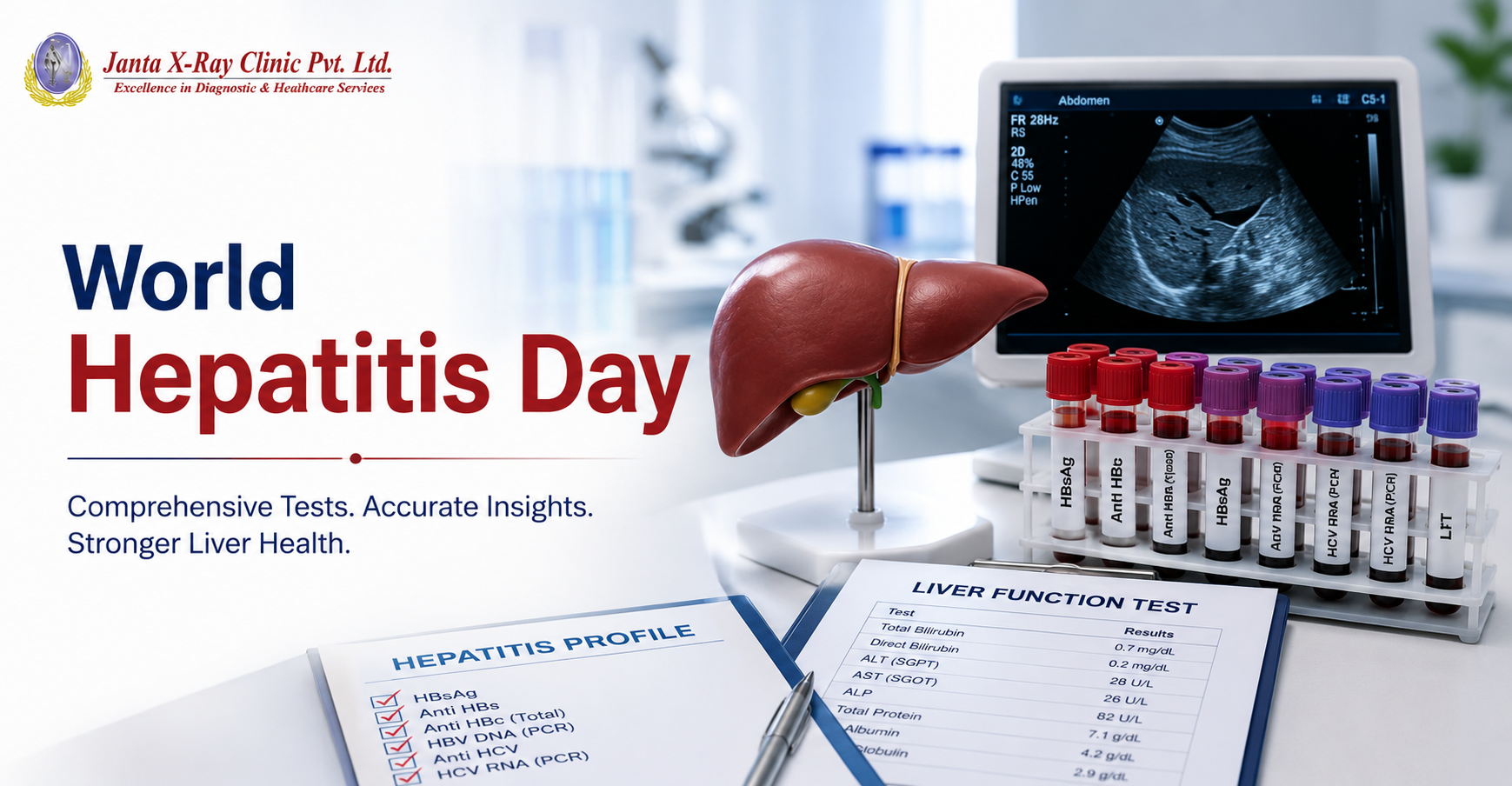
The liver is one of the few organs that continues performing hundreds of vital functions even when it is under stress. It filters blood, processes nutrients, stores energy, and supports metabolism without demanding attention. That is one reason viral hepatitis often remains unnoticed for long periods. People may continue feeling completely normal while the liver quietly adapts to ongoing inflammation.
On World Hepatitis Day, the conversation should move beyond awareness and focus on understanding liver health through the right combination of hepatitis tests, laboratory investigations, and imaging. A single report rarely explains the complete picture. Accurate liver evaluation comes from understanding infection, immunity, viral activity, and the condition of the liver together.
Understanding Hepatitis Requires More Than One Test
Every investigation answers a different clinical question, which is why physicians often recommend a combination of liver diagnostic tests rather than relying on a single result.
The HBsAg Test identifies an active Hepatitis B infection, while the Anti HBs Test helps determine whether the body has developed protective immunity through vaccination or previous exposure. Total Anti HBc (Hepatitis B Core Antibody) provides important information about past infection and often helps complete the clinical history.
To understand how the liver is functioning, a Liver Function Test (LFT) evaluates important biochemical markers that reflect liver health. If further assessment is required, the HBV DNA Test measures the amount of Hepatitis B virus present in the blood, helping clinicians understand viral activity and monitor treatment response.
For Hepatitis C, the Anti HCV Antibody Test indicates previous exposure, while the HCV RNA (PCR) Test confirms whether the virus is currently active.
Assessment is not limited to laboratory testing alone. An Ultrasound Abdomen (USG Abdomen) helps evaluate the liver's size, texture, surrounding structures, and associated abnormalities. FibroScan provides additional information by measuring liver stiffness and fat accumulation without surgery, making it an important tool for evaluating liver fibrosis and long term liver health.
Each investigation contributes valuable information. Together, they provide a comprehensive understanding that no individual report can offer.
Modern Liver Evaluation Is About Connecting the Dots
Today's approach to hepatitis goes far beyond identifying a virus. It is about understanding how the liver is responding and what the findings mean for the individual.
Someone may have active viral replication despite feeling healthy. Another individual may have developed protective immunity after vaccination. Some may show previous exposure without active disease, while others may require molecular testing to understand ongoing viral activity.
This is why clinicians often combine HBsAg Test, HBV DNA Test, Liver Function Test, Anti HCV Test, HCV RNA PCR, Ultrasound Abdomen, and FibroScan as part of a comprehensive liver health check. Each investigation answers a specific question, allowing clinical decisions to be based on evidence rather than assumptions.
Precision Comes From a Complete Evaluation
The most meaningful diagnosis is rarely built on a single number. It is built by combining laboratory findings with imaging and understanding how they relate to the patient's clinical condition.
At Janta X-Ray Clinic Pvt. Ltd., comprehensive pathology and imaging services enable clinicians to evaluate liver health through advanced laboratory investigations and modern diagnostic imaging, ensuring every report contributes to a clearer clinical picture.
Message from Mr. Abhishek Gupta, Director (Operations)

"At Janta X-Ray Clinic Pvt. Ltd., we regularly perform hepatitis-related investigations for individuals across almost every age group. Students, working professionals, expecting mothers, senior citizens, and people undergoing preventive health evaluations all come with different clinical backgrounds. Viral hepatitis does not follow a fixed age or lifestyle. What truly supports clinical decision making is a comprehensive diagnostic evaluation that combines laboratory investigations with imaging, allowing physicians to understand the complete picture rather than isolated findings."
Clinical Perspective from Dr. Priyanka Anand, Consultant Pathologist & HOD (Lab)

"No single investigation should be viewed in isolation while evaluating hepatitis. Each marker answers a specific clinical question. Combining serological markers, molecular testing, liver function assessment, and imaging allows us to understand infection status, immunity, viral activity, and liver health together. That comprehensive approach supports accurate clinical interpretation and appropriate patient management."
FAQs
1. If my Liver Function Test is normal, can hepatitis still be present?
Yes. Liver enzymes may remain within the normal range in certain stages of viral hepatitis. That is why doctors often recommend specific hepatitis markers such as HBsAg, Anti HCV, or molecular tests based on clinical history.
2. Why does my doctor recommend both blood investigations and an Ultrasound or FibroScan?
Blood tests explain what is happening biologically, while Ultrasound and FibroScan show how the liver itself is responding. Together, they provide a more complete clinical assessment.
3. What is the difference between HBsAg and HBV DNA?
HBsAg indicates the presence of Hepatitis B infection. HBV DNA goes a step further by measuring how actively the virus is replicating, which helps clinicians make treatment and monitoring decisions.
4. If my Anti HCV test is positive, does that mean I currently have Hepatitis C?
Not necessarily. A positive antibody test indicates previous exposure. An HCV RNA (PCR) test is required to confirm whether the virus is still present and active.
5. Why is FibroScan becoming an important part of liver evaluation?
FibroScan measures liver stiffness and fat content without needles or surgery. It helps clinicians understand whether long standing liver inflammation has resulted in fibrosis, making it an important complement to laboratory investigations rather than a replacement for them.



.png)


1.jpg)
Comments List