
Preparing for a CT or MRI? Here Are the Answers Every Patient Should Know
.jpg)
Being advised to undergo a CT Scan or an MRI Scan often brings a series of questions. Do I need to fast? Is contrast necessary? Will the scan be uncomfortable? Is one better than the other?
These concerns are understandable, yet the answers are rarely the same for every patient. In Radiology, the choice of an investigation is guided by your symptoms, medical history and the clinical question your doctor needs answered. A CT vs MRI comparison is not about deciding which technology is superior. It is about selecting the examination that provides the most meaningful information for a particular condition.
According to Dr. Varun Kumar, MD Radiology, with decades of experience in diagnostic imaging, patient preparation is as important as the technology itself.

"A scan is not performed to create images. It is performed to answer a clinical question with precision. The quality of that answer depends on three things working together: the right examination, the right preparation, and a radiologist who understands the clinical context rather than interpreting images in isolation."
- Dr. Varun Kumar, MD Radiology
Before Your CT Scan or MRI Scan: What Patients Want to Know
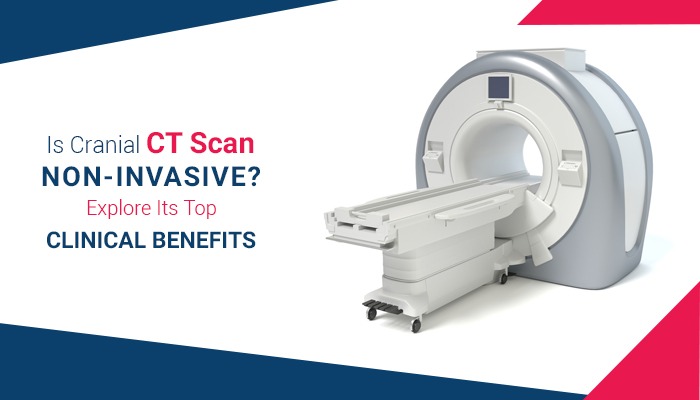
One of the most common questions is about CT vs MRI. While both are advanced imaging techniques, they serve different purposes. A CT Scan is often preferred when speed is essential, such as evaluating trauma, fractures, lung conditions or internal bleeding. An MRI Scan, on the other hand, provides exceptional detail of soft tissues, making it valuable for assessing the brain, spine, joints, ligaments and several neurological conditions.
Many patients also ask, "Is CT Scan safe?" A CT Scan uses carefully controlled X-rays, and modern scanners are designed with dose optimisation techniques that help minimise CT Scan radiation while maintaining diagnostic quality. When your doctor recommends a CT examination, the expected clinical benefit generally outweighs the potential risks associated with radiation exposure.
Questions about MRI preparation are equally common. Unlike CT, an MRI Scan uses a powerful magnetic field rather than radiation. Before the examination, patients are asked about metal implants, pacemakers, previous surgeries or metallic foreign bodies because these factors may influence whether an MRI can be performed safely.
Another frequent concern involves MRI contrast and CT contrast. Contrast agents are not required for every patient. They are recommended only when they provide additional information that cannot be obtained from routine imaging alone. Your medical history, kidney function and the purpose of the examination are carefully reviewed before contrast is administered.
Preparation instructions also vary. CT Scan preparation for certain examinations may include CT Scan fasting for a few hours, while many routine CT studies require no fasting at all. Similarly, MRI preparation depends on the body part being examined and whether contrast is planned. Following the instructions provided by your imaging centre helps ensure accurate results and avoids unnecessary delays.
Patients with MRI claustrophobia often worry about remaining inside the scanner. Informing the radiology team beforehand allows them to explain the procedure, maintain communication throughout the examination and, where appropriate, discuss options that make the experience more comfortable.
What Happens After the Scan Matters Too
The examination does not end when the images are acquired. Every CT Scan and MRI Scan generates hundreds, and sometimes thousands, of images that require careful evaluation by a Radiologist. These findings are interpreted alongside your clinical history, previous investigations and the reason your doctor requested the scan. This detailed review is why a comprehensive report takes time and should never be rushed.
At Janta X-Ray Clinic Pvt. Ltd., advanced imaging technology is supported by experienced radiologists who focus not only on image quality but also on meaningful clinical interpretation. Whether you require a CT Scan or an MRI Scan, every examination is performed with established imaging protocols and a patient-centred approach.
If your doctor has advised diagnostic imaging and you have questions before the examination, our team is available to guide you through the preparation process and help you understand what to expect.
Book your appointment with Janta X-Ray Clinic Pvt. Ltd. and experience diagnostic imaging backed by clinical expertise and advanced technology.
Frequently Asked Questions
Question: Why would my doctor recommend both a CT Scan and an MRI Scan for the same problem?
Answer: These examinations often complement each other rather than replace one another. A CT Scan may rapidly identify structural abnormalities, while an MRI Scan can provide greater detail of soft tissues, nerves or ligaments. Together, they may answer different aspects of the same clinical question.
Question: Can moving during an MRI Scan really affect the report?
Answer: Yes. Even slight movement can reduce image clarity, particularly during brain, spine and joint examinations. Remaining still helps the Radiologist evaluate fine anatomical details with greater confidence.
Question: Why do radiology centres ask for previous CT or MRI reports?
Answer: Comparing current images with earlier studies allows the Radiologist to determine whether a finding is new, stable or progressing. This comparison often adds significant clinical value and may prevent unnecessary repeat investigations.
Question: If my symptoms improve, should I skip the CT Scan or MRI Scan?
Answer: Not without discussing it with your treating doctor. Imaging is often recommended to confirm or exclude specific conditions, even if symptoms have partially settled. The need for a scan depends on the underlying clinical concern rather than symptoms alone.
Question: Does a normal CT Scan or MRI Scan always rule out disease?
Answer: Imaging findings must always be interpreted alongside your symptoms, examination and laboratory investigations. A normal scan is reassuring, but clinical correlation remains essential because some conditions may require additional evaluation or follow-up.
Question: Why does an MRI Scan usually take longer than a CT Scan?
Answer: An MRI Scan acquires multiple image sequences that highlight different tissue characteristics, whereas a CT Scan captures images much more rapidly. The additional time allows MRI to provide detailed information for selected clinical indications.



1.jpg)

.jpg)

.png)
2.jpg)

Comments List