
Fever Causes: When to Get Tested for Dengue, Typhoid & Flu
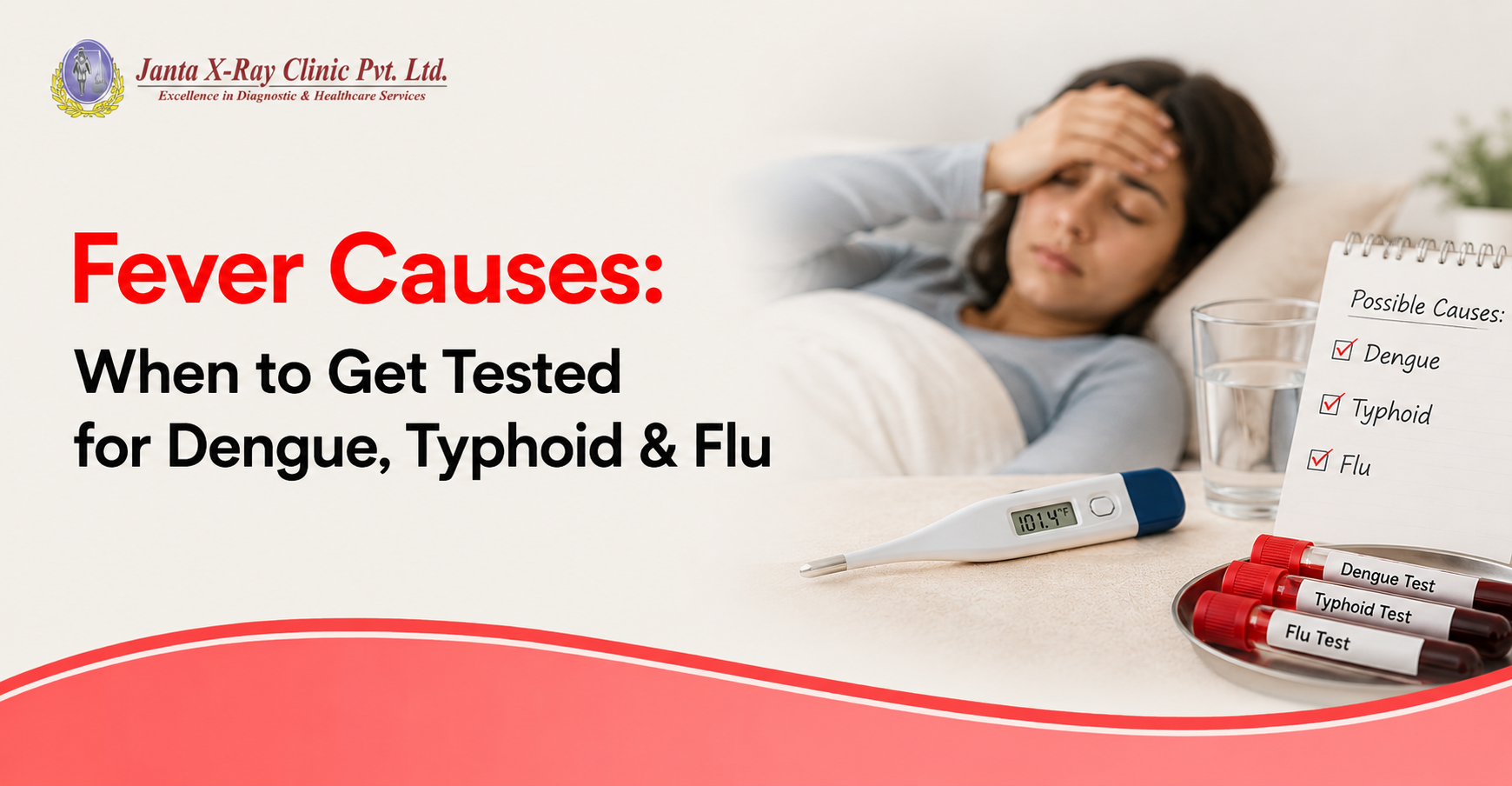
A fever of 101°F or 102°F usually raises one immediate question: what is causing it?
Sometimes, the cause is a common viral infection and the fever settles within a few days. But fever can also occur with dengue, typhoid or influenza. Since these infections can produce similar symptoms, it isn't always possible to identify the cause from temperature alone.
The symptoms that appear with the fever, how long it has lasted and the right laboratory test can help narrow down the possibilities.
What Are the Common Causes of Fever?
Fever commonly occurs when the body is responding to an infection. Viral infections are frequent causes, but bacterial infections and mosquito-borne illnesses can also lead to fever.
The accompanying symptoms can provide some useful clues. Influenza often causes a sudden fever with chills, cough, sore throat and body aches. Dengue may cause fever with marked body pain, headache and pain behind the eyes. Typhoid can cause persistent fever along with weakness, headache and digestive symptoms.
These symptoms are not specific enough to confirm an infection on their own. A person with fever and body aches, for example, could have dengue, influenza or another viral infection. This is where appropriate testing becomes useful.
Dengue Fever: When Should You Get Tested?
Dengue is an important cause of fever in areas where dengue infections are common. The illness may begin with a sudden fever, followed by significant muscle and joint pain, headache, pain behind the eyes, nausea or a rash.
When dengue is suspected, a Dengue NS1 test may be recommended, particularly during the early stage of the illness. It detects the NS1 antigen associated with dengue virus.
The timing of dengue testing is important because the markers detected by different tests can change as the illness progresses. A doctor can therefore recommend the appropriate investigation based on when the fever started.
A CBC (Complete Blood Count) may also be advised while evaluating suspected dengue. It provides information about white blood cells, platelets and other blood components. However, CBC findings alone cannot confirm dengue.
If fever is accompanied by strong body aches or other symptoms suggestive of dengue, testing can help determine whether dengue needs to be considered rather than assuming that the illness is simply a viral fever.
Typhoid Fever: When Does Testing Make Sense?
Typhoid fever can cause a persistent fever that continues over several days. Weakness, headache, abdominal discomfort and changes in bowel habits may occur along with the fever.
When this pattern raises suspicion of typhoid, a Typhi Dot test may be included in the diagnostic evaluation.
However, persistent fever does not automatically mean typhoid. Other infections can also cause fever that lasts for several days. The duration of fever, associated symptoms and medical history all need to be considered before deciding whether typhoid testing is appropriate.
A test result should also be interpreted in the context of the patient's symptoms rather than being treated as the only factor in diagnosis.
Flu and Influenza: When Is Testing Useful?
Influenza, commonly known as flu, often begins suddenly. Fever may appear with chills, cough, sore throat, headache, muscle aches and significant tiredness.
These symptoms can resemble other respiratory infections, so they don't always confirm influenza. When the clinical symptoms suggest flu, a H1N1, H3N2 & Influenza B Qualitative PCR can be used to detect the specified influenza viruses.
The test identifies viral genetic material and can help determine whether the illness is associated with H1N1, H3N2 or Influenza B.
This can be particularly useful when a person has fever and flu-like symptoms and the doctor needs to distinguish influenza from other possible causes.
Which Test May Be Needed for Fever?
There is no single fever test that can identify every possible cause. The investigation depends on which infection is suspected.
|
Suspected cause |
Test |
What it helps assess |
|
Dengue |
Dengue NS1 |
Dengue infection, particularly during the early stage |
|
Typhoid |
Typhi Dot |
Evaluation of suspected typhoid |
|
Influenza |
H1N1, H3N2 & Influenza B Qualitative PCR |
The specified influenza viruses |
|
General blood evaluation |
CBC |
Blood cell counts |
|
Inflammation |
CRP |
C-reactive protein levels |
The CRP test measures C-reactive protein, which can increase when inflammation is present in the body. It does not identify dengue, typhoid or influenza by itself, but it can provide additional information during the evaluation of fever.
Similarly, a CBC can show changes in blood cell counts without identifying the exact infection responsible for the fever.
The aim is not to undergo every available test. The aim is to choose an investigation that fits the symptoms and the suspected cause.
When Should You Get Tested for Fever?
A mild fever associated with a short-term infection may settle as the illness improves. But when fever continues, returns or develops with symptoms that suggest a particular infection, medical evaluation becomes more important.
For instance, fever with severe body aches may lead to dengue testing. Persistent fever with digestive symptoms may prompt an evaluation for typhoid. Sudden fever with cough, chills and body aches may make influenza testing appropriate.
The duration of fever also matters. A test that is useful during the early stage of one infection may not provide the same information later. This is why the number of days since the fever began should be considered when selecting a test.
Rather than trying to identify the infection from fever alone, a doctor can assess the overall symptoms and recommend the investigation that is most relevant.
Fever Testing at Janta X-Ray
When the cause of fever isn't clear, appropriate testing can help provide a better understanding of what may be happening.
At Janta X-Ray, fever-related investigations include CBC, CRP, Dengue NS1, Typhi Dot, and H1N1, H3N2 & Influenza B Qualitative PCR.
These tests cover some of the important infectious and inflammatory causes that may be considered when evaluating fever. The appropriate investigation depends on the symptoms, duration of illness and clinical assessment.
A fever is a sign that something is happening in the body. The right test can help determine what needs to be investigated further.


.jpg)


.jpg)
.png)
.jpg)
.jpg)
Comments List